As an Amazon Associate, we earn from qualifying purchases. Some links on this site are affiliate links at no extra cost to you. Our recommendations are based on thorough research and editorial judgment.

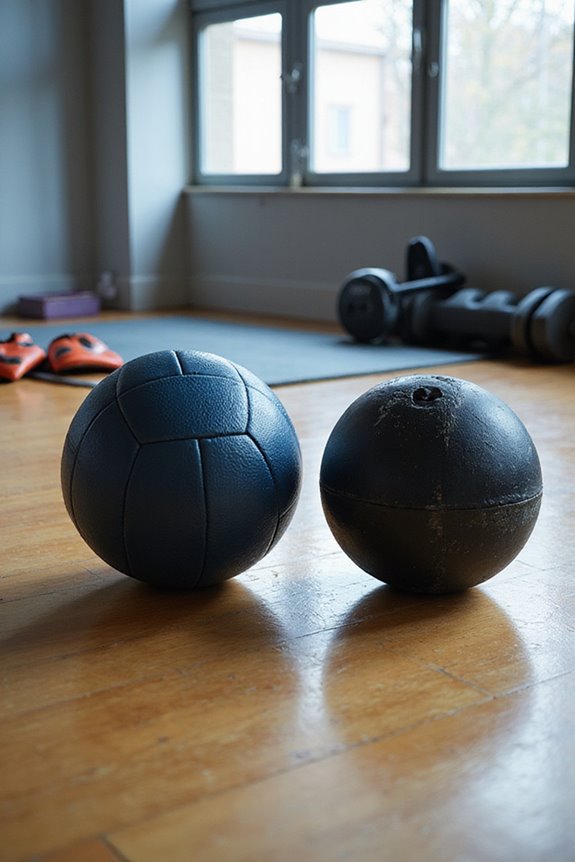
How Do Medicine Ball and Slam Ball Exercises Differ?

Medicine ball and slam ball exercises differ in design and application. Medicine balls are softer and lighter, meant for controlled movements and core stability, whereas slam balls are heavier and designed for high-impact workouts. The construction of slam balls allows them to absorb shock, preventing rebounds, while medicine balls support dynamic exercises. Use medicine balls for balance and rehabilitation, and slam balls for explosive power training. Understanding these differences will enhance workout effectiveness and safety. Further insights on their applications await.
Key Takeaways
- Medicine balls are designed for controlled movements, enhancing core stability and total body coordination, while slam balls focus on high-intensity explosive power.
- Slam balls are heavier and denser, making them ideal for slamming exercises, whereas medicine balls are lighter for a broader range of exercises.
- The construction of medicine balls includes stitched seams and softer fills, while slam balls have molded rubber casings for durability and shock absorption.
- Medicine ball workouts support rehabilitation and joint health through moderate weight exercises, unlike slam balls that emphasize heavy-impact training.
- Exercise examples include overhead passes with medicine balls and explosive slams with slam balls, catering to different fitness objectives and intensity levels.
Material Composition and Construction
The material composition of medicine balls and slam balls plays a crucial role in their performance and functionality. Medicine balls typically use softer outer shell material types like synthetic leather, vinyl, or rubber. This design enhances grip and comfort during exercises. In contrast, slam balls feature a heavy-duty rubber outer casing, specifically crafted to withstand substantial impacts. Construction methods differ as well; medicine balls often utilize stitched seams for durability, while slam balls are usually molded for seamless resilience. This means that slam balls can absorb shock effectively, preventing rebounds and safety issues. The internal materials also vary, with medicine balls filled with softer materials, whereas slam balls sport a denser core designed to maintain shape under pressure. Additionally, many medicine balls are designed with textured surfaces for grip, catering to various exercise routines and enhancing user experience.
Weight and Size Differences

When comparing weight and size differences between medicine balls and slam balls, it is essential to recognize how these variations affect exercise performance. Weight comparisons show that medicine balls range from 2 to 30 pounds, while slam balls typically start at 10 pounds and can exceed 100 pounds. This means slam balls cater to more advanced users and heavy-impact workouts. Size variations also play a significant role; medicine balls have smaller diameters for easier gripping, while slam balls can reach up to 15 inches. The higher density of slam balls means they are designed to absorb impact without bouncing, allowing for powerful slamming exercises. In contrast, medicine balls support varied movement due to their lighter weight and moderate size, enabling dynamic exercise routines effectively. Additionally, incorporating battle ropes into a workout can enhance strength training and conditioning.
Recommended Products
For the Whole Family: Family fun HERO 14-foot backyard trampoline for kids and adults with ASTM safety specification, Ideal for jumpers weighing 40 to 200 pounds with a maximum user weight of 550 pounds
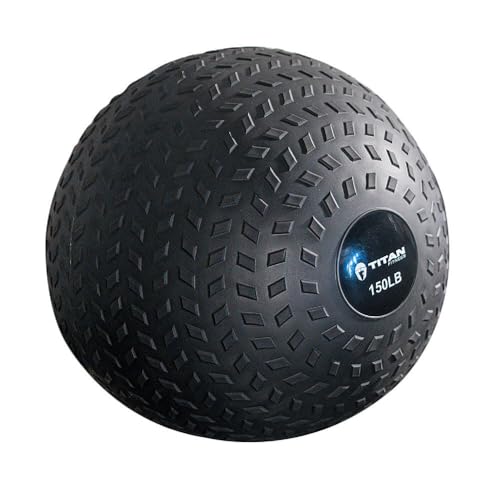
TREAD PATTERN GRIP: As your hands sweat throughout a workout, the Slam Ball's high-quality tread-patterned rubber shell ensures a steady slip-resistant grip. The outer shell also includes the Titan logo and weight indication molded into the ball printed in white.

Large & Professional to Level Up Your Home Gym: 6 sizes for choice to meet your fitness needs of solo workouts, couple use, or family exercise; you can also combine exercise mats for home workout with a spacious area; your ideal workout mats for home gym for all intensities of exercise like Cardio, dance, Zumba, T25, weightlifting, yoga, stretching, dumbbell; use with or without shoes
Intended Exercise Types and Benefits

Engaging in medicine ball exercises offers diverse benefits that cater to multiple fitness goals. These exercises primarily enhance core strength and stability, which is essential for athletes and individuals seeking functional fitness. The intended benefits include improved balance, coordination, and explosive strength. Dynamic movements such as throws effectively engage multiple muscle groups, increasing overall power output and reinforcing core activation. This exercise focus allows for better performance in sports requiring quick, forceful movements. Additionally, medicine ball routines can support rehabilitation, promoting joint health through controlled motions that improve range of motion. Overall, the versatility of medicine ball exercises enables the targeting of various fitness objectives, making them suitable for anyone looking to strengthen their body efficiently. Moreover, incorporating slam balls into workouts can further enhance functional fitness and athletic performance.
Recommended Products

ONE BENCH for all your workouts : Completely self-contained the bench is designed to fit in any room in your home. The FXD Bench is the most versatile bench in the game with the smallest footprint possible. Perfect for traditional Strength Training HIIT or Bodyweight with a huge range of accessories | ALL-IN-ONE: Minimize transition time so you can maximize your workout. 6 pressing positions 6 pulling positions 100s of banded hook combos stable enough for box jumps. Resistance rails engage training variety and optionality by providing anchor points at any bench angle or position | SELF OR INSTRUCTOR-LED: Crafted to work seamlessly with instructor-led app-led or self-led workouts — dual-angle bench allows you to always be facing forward (toward your phone or instructor) | COMPACT MOBILE: Easy to move with our patented single lever brake release. | UNPARALLELED QUALITY: Built for commercial gym or home use.

PRECISE WEIGHT SELECTION – 180 TO 780LB: This package contains a pair of 5LB,10LB, 15LB, 25LB, 35LB Dumbbells with 1 X 5-Tier Rack. Designed to store most sizes of dumbbells, the RITFIT Dumbbell Rack is ideal for your home gym setup to keep your training space organized.

Mega soft medicine balls- 4 ,6, 8, 10, 12, 14, 16, 18, 20, 22, 25 lbs
Exercise Application Examples
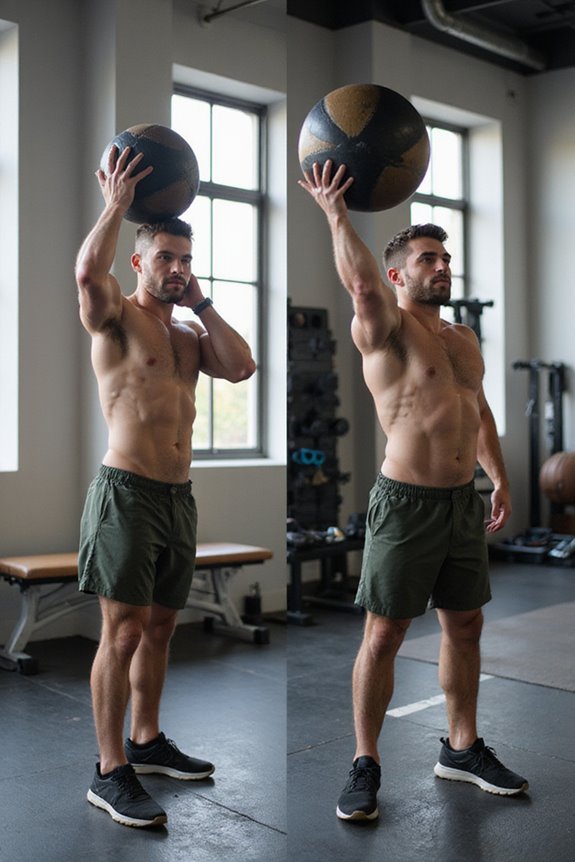
Exercise application examples showcase the practical use of medicine balls and slam balls in workouts tailored to specific fitness goals. For upper body training, medicine balls are excellent for controlled exercises like overhead passes and rotational throws, emphasizing muscle targeting. In contrast, slam balls are ideal for high-intensity overhead slams that develop explosive power.
For lower body workouts, medicine balls enhance core stabilization through exercises like Russian twists, while slam balls promote full-body power with explosive movements. Circuit training can include both balls, with slam balls increasing training intensity through dynamic repetitions. Additionally, medicine balls are perfect for plyometric routines focusing on power development, while slam balls support high-impact exercises, enhancing muscle engagement and agility. Incorporating adjustable weight vests in workouts can also help to intensify training sessions and improve overall fitness levels.
Recommended Products

Safe and Durable Design: Ensures a safer bounce with no springs, minimizing injury risks; Built with high-quality materials and withstands heavy use and varying weather conditions, providing long-lasting durability and performance

DURABLE CONSTRUCTION - Solid steel rods with solid wood handles for intense gameplay

MULTIFUNCTIONAL YOKE STAND: The Strongman Yoke is fully customizable for any workout from basic yoke carry to Zercher carry or transform the stand into a squat rack, push/pull sled, or fat-grip pull-up station.
Durability and Impact Resistance

Durability and impact resistance are essential factors to take into account when choosing between medicine balls and slam balls for a fitness routine. Slam balls feature a thick rubber or PVC outer shell, designed to handle high-impact exercises, ensuring superior durability and impact longevity. Their dense fill prevents bounce and maintains performance consistency, even under intense usage. In contrast, medicine balls, with air or gel interiors, may suffer from splits or leaks when subjected to slamming. Regular use in high-impact workouts can degrade their outer shells faster. Consequently, those focusing on explosive movements should prioritize slam balls for their toughness. For gentler exercises, medicine balls can be suitable, though they will not withstand aggressive impacts as well as slam balls. It is also advisable to consider high-density foam construction in your decision-making process, especially if you’re incorporating varied dynamic movements into your workouts.
Recommended Products

DURABLE 54 IN BACKBOARD: Steel framed polycarbonate basketball backboard delivers shatterproof performance for intense play. Designed for a 54 inch portable basketball hoop setup in any driveway or backyard court.

52-Inch Shatterproof Backboard: This wall-mounted hoop features a 52×32-inch PC backboard engineered for high-performance play. It withstands aggressive shots and intense rebounds, while delivering consistent ball response for realistic gameplay

SHATTERPROOF 50 IN BACKBOARD: 50 in. x 30 in. x 2 in. Fusion backboard with blow molded frame pad delivers durable rebound performance. This portable basketball hoop features a shatterproof surface built for outdoor play.
Training Adaptability and Goal Alignment
How can individuals effectively align their training objectives with the appropriate use of medicine balls and slam balls? First, recognize that both types offer training versatility for different goals. Medicine balls are suitable for endurance and coordination, while slam balls excel in power and strength training. Choose the right ball based on your focus—lightweight medicine balls are ideal for controlled movements and skill development. In contrast, heavier slam balls are perfect for explosive exercises. Start with medicine balls for foundational skills before progressing to slam balls to enhance your power training. By understanding the weight ranges and exercise types each offers, individuals can strategically align their goals and guarantee effective exercise progression throughout their training journey.
Recommended Products
![METIS Fitness Slam Balls [7lbs-66lbs] | Build Strength and Power with Bounce-Resistant Slam Balls - Available Individually or as a Set (Heavy Set (26lbs-66lbs) + Rack)](https://m.media-amazon.com/images/I/41MgkOe61jL._SL500_.jpg)
VERSATILE FULL BODY WORKOUT - Engage in explosive exercises targeting core strength, shoulders, back, arms, and legs with these Fitness Slam Balls, suitable for both gym and home workouts.

【UPGRADED WIDE FINGER LOOPS (36mm x 80cm)】Elevate your training with the MIKOLO Soft Medicine Ball, engineered for enhanced grip, durability, and versatility. Our upgraded medicine ball features an enlarged, wide nylon finger loop—measuring 36mm in width with an 80cm circumference—to provide a secure and flexible grip for your workout, giving you maximum grip space and stability for dynamic lifts, tosses, and slams.

【SUPERIOR GRIP】- Unlike rubber exercise balls, wall balls with reinforced seam construction enhance your grip on the squash for functional fitness and heavy-weight training exercises.
Frequently Asked Questions
Can I Use a Medicine Ball for Slamming Exercises?
Using a medicine ball for slamming exercises is not recommended due to its limited versatility and potential for damage. In contrast, a slam ball offers durability, making it suitable for high-impact, explosive workouts.
How Should I Choose the Right Weight for My Ball?
Choosing the perfect weight is like crafting a fine recipe; it blends personal fitness goals with weight selection. Balancing controlled movements with explosive power defines ideal weight, ensuring both safety and effectiveness in training.
Are There Age Recommendations for Using These Balls?
Age appropriateness in using medicine and slam balls is essential. Youth fitness typically allows lighter medicine balls for adolescents, while older teens and adults engage in slam ball workouts, emphasizing safety and personal fitness levels across ages.
Can Both Balls Be Used in Home Workouts?
Both medicine balls and slam balls can effectively be used in home workouts, offering a variety of exercise options. Each type provides distinct benefits, allowing users to tailor their routines to fit individual fitness goals and space constraints.
What Are Some Safety Tips for Using These Balls?
In the domain of fitness, where strength meets strategy, ball handling and injury prevention become paramount. Proper grip and technique safeguard against mishaps, while gradual intensity boosts performance, ensuring an exhilarating yet safe workout experience.


