As an Amazon Associate, we earn from qualifying purchases. Some links on this site are affiliate links at no extra cost to you. Our recommendations are based on thorough research and editorial judgment.


How Do I Fix Warped Styrene Parts?

To fix warped styrene parts, start with mechanical straightening techniques. Apply gentle bending with controlled force to reshape the part. For heat-based methods, immerse the part in hot water (170-200°F) for 1-3 minutes, then reshape gently and cool it quickly in cold water. Consider reinforcing the part afterward with internal supports or hardening coatings for added stability. These steps guarantee a strong and straight result. More detailed techniques for each method can enhance your success.
Key Takeaways
- Use gentle bending techniques with controlled force to reshape warped styrene parts, checking alignment frequently to avoid overcorrection.
- Employ a hot water bath method at 170-200°F for 1-3 minutes, then reshape carefully and cool in cold water.
- For localized warps, apply a heat gun set around 210°F, moving it constantly to prevent overheating and ensure effective correction.
- Reinforce corrected parts using internal rods or polymeric filaments to enhance strength and prevent future warping.
- Always secure parts flat during heating and cool immediately to lock in their new shape for best results.
Causes of Warped Styrene Parts
Warped styrene parts often arise from various factors inherent in their material properties and the conditions during production. The shrinkage behavior of styrene can differ, especially when it comes to temperature gradients during cooling. Non-uniform cooling leads to differential shrinkage, causing internal stresses and resulting in warping. Uneven cooling often occurs when one side of the part cools faster than the other, leading to bending. Additionally, variations in wall thickness can exacerbate this issue; thicker sections shrink more than thinner areas. It is crucial to guarantee that mold designs promote even cooling and account for potential temperature variations. Attention to these aspects during the manufacturing process will help mitigate the risk of warped styrene parts. Using the right grit variety when sanding can also help correct any minor imperfections after warping.
Mechanical Straightening Techniques

Correcting warped styrene parts requires effective mechanical straightening techniques that can restore the intended shape without damaging the material. Utilize gentle bending techniques that apply controlled force to reshape the part. Begin with incremental pressure, checking alignment often to prevent overcorrection. Strategically place support points while applying force opposite to the warp to achieve ideal results. Use clamps, vises, or custom jigs to secure the part and evenly distribute pressure. Employ soft mallets or rubber hammers to coax the part gently, avoiding sharp impacts that can cause cracks. After reshaping, allow the part to rest under a weight or clamp to maintain its corrected shape. Regularly inspect the part to monitor its stability over time. Additionally, these methods of straightening can be enhanced by using precision application techniques to ensure correct adhesion when reattaching any parts that may have become loose during the process.
Recommended Products
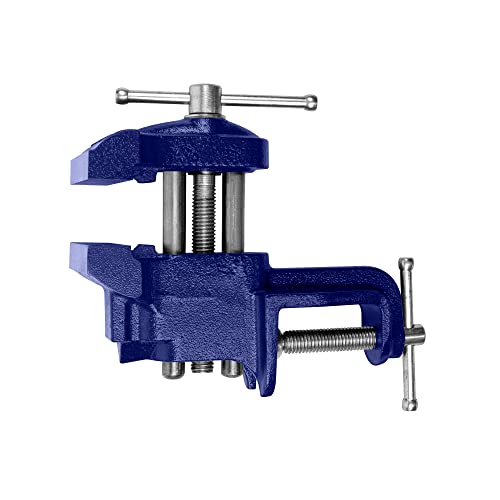
Easy clamp-on feature for working almost anywhere Can attach to tables up to 2" thick Anvil shaping horn incorporated into the design Sturdy integrated pipe jaws keep the...
Heat-Based Correction Methods

Heat-based correction methods offer an effective way to reshape styrene parts suffering from warping. Two common techniques are the hot water bath method and the heat gun application. For the hot water method, heat water to about 170-200°F (77-93°C) and immerse the warped part for 1-3 minutes. Use gloves to handle the part and reshape it gently after removal. Quickly cool it in cold water to lock in the new shape.
Alternatively, a heat gun can be employed. Set it around 210°F and direct heat onto the warped areas, while shielding untouched parts with aluminum foil. Move the heat gun constantly to avoid hotspots. After reshaping, allow the part to cool to guarantee permanent correction. Using appropriate cleaning tools can also help ensure the success of your repair efforts by keeping the parts free from debris.
Recommended Products

Multipurpose Fit: Repairs at least 98% of the plastics on the market. Suitable for repairing: bumper, dashboard, lamp holder, plastic ring, radiator, spoiler, handles, headlights, plastic wings, car and motorcycle plastic device, etc

▶ 【Strong Power With 2 Modes】 SEEKONE 1800W heat gun provides strong power quickly heat up to 1202℉(650℃) in 1.5 seconds. Two modes: I: 50-450℃, 190-210L/min; II: 50-650℃, 250-500L/min

220W Rapid Heating:The plastic welding machine has a power of 220 watts and a 110V-US plug, which has higher output current and faster heating speed. Using heat to embed nails or plastic rods into plastic will not cause damage to the car or plastic surface, and is very sturdy. Not only are there two repair methods to choose from: welding rods and hot nails, but there is also an overheat protection device to ensure your safety
Reinforcement and Stabilization After Correction

Reinforcing and stabilizing styrene parts after correction is essential for ensuring their durability and functionality. First, consider internal reinforcement by embedding metal or carbon fiber rods within hollow parts. This greatly increases their structural rigidity. Additionally, use polymeric filaments for continuous fiber reinforcement to enhance strength. To further bolster the material, mix in natural fiber fillers, but monitor filler content to prevent processing issues.
Adhesive stabilization can supplement these efforts. While cyanoacrylate adhesives can bond surfaces, they provide limited structural support. Instead, apply coatings of hardening resins or epoxy to enhance surface hardness and moisture resistance. These combined methods improve dimensional and mechanical stability, ensuring that the corrected styrene parts withstand operational stresses effectively. Utilizing model decal softeners can also aid in achieving smoother finishes on these reinforced areas, as they help conform decals to uneven surfaces and enhance adhesion.
Recommended Products

J-B Weld ClearTop is a two-part pour-on epoxy that is specially formulated for coating projects on tables, bartops, and other surfaces. ClearTop cures crystal clear in 24 hours with a durable finish that is scratch and impact resistant

Clear epoxy adhesive liquid bonds wood, metal, glass, ceramic, concrete, and fabric

Prefect fro Any Artist’s Project : PUDUO Epoxy Resin has been created specifically for the resin art marker! Come with 16 oz crystal clear epoxy resin and 16oz crystal clear hardener, Mix 1:1 by volume.
Practical Tips and Warnings
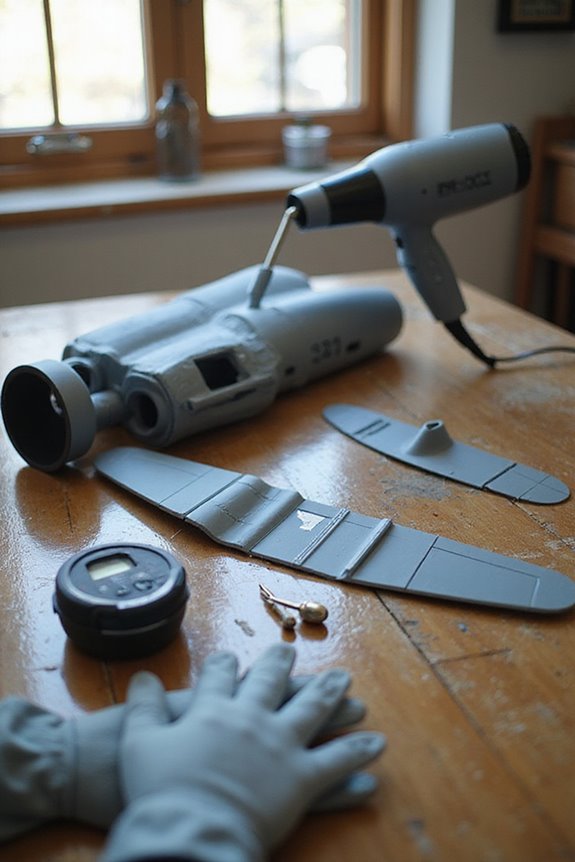
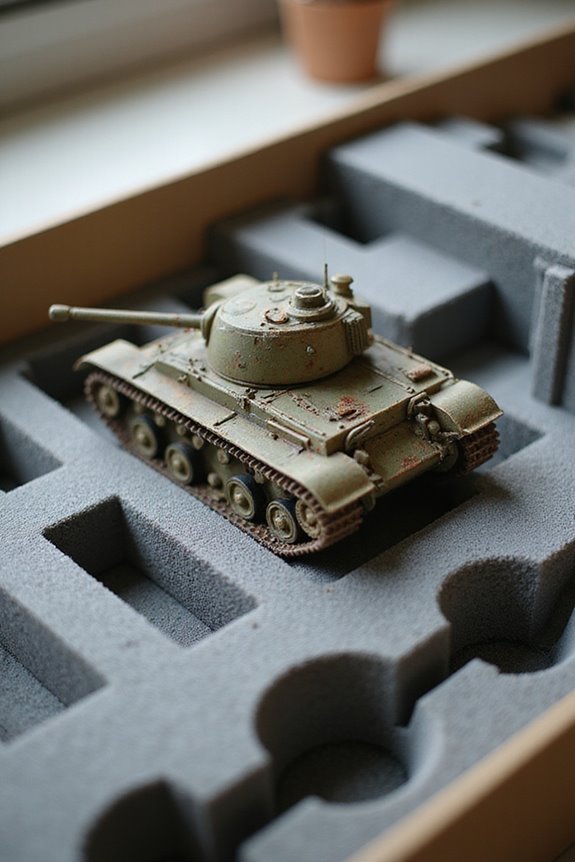
When working with warped styrene parts, it is essential to approach the correction process with caution and precision. First, consider prevention methods, such as selecting thicker styrene materials to minimize warping. When using heat treatment techniques, immerse parts in hot water that is around 170°F until they become pliable. Avoid open flames and unregulated heat sources to prevent additional warping. Secure parts flat during heating using straight edges, and apply continuous pressure with clamps or rubber bands. After reshaping, immediately cool the parts in cold water to lock in their new shape. Finally, always work slowly with older or thinner parts, as they may be more brittle and susceptible to breaking during correction. Additionally, utilizing essential tools like sharp hobby knives and tweezers can enhance your precision while working on your tank models.
Frequently Asked Questions
Can I Prevent Styrene Parts From Warping Initially?
Preventing warping of styrene parts initially involves proper styrene storage, maintaining stable temperatures, and minimizing environmental fluctuations. Understanding warping causes allows for better design, adhesion, and processing techniques to guarantee ideal part integrity during creation.
What Type of Adhesive Works Best for Repaired Styrene Parts?
As uncertainty loomed over the repair, the choice of adhesive became essential. Cyanoacrylate glue, while quick, lacked strength; plastic welding offered a more reliable bond, ensuring durability and stability in the painstaking restoration process.
How Long Does the Correction Process Typically Take?
The correction process duration varies based on repair techniques, typically taking 10-20 minutes for effective reshaping. Drying time for reshaped parts can range from a few minutes to several hours for ideal stability.
Is There a Specific Temperature Range for Storing Styrene Parts?
Storing styrene parts in a temperature paradise, ideally between 15°C and 25°C, dramatically reduces temperature effects on integrity. Temperatures soaring above 30°C evoke chaos, leading to potential warping and degradation of beloved styrene’s essential qualities.
Can I Use Heat Guns for Reshaping Styrene Safely?
Using heat guns for reshaping styrene can be safe with proper heat application and adherence to safety precautions. Controlled temperatures, focused heating, and protective measures guarantee effective reshaping while minimizing risks of damage or injury.